
1. Diversity of Cultures Celebration (Chhath Puja Celebrated at KIIT )
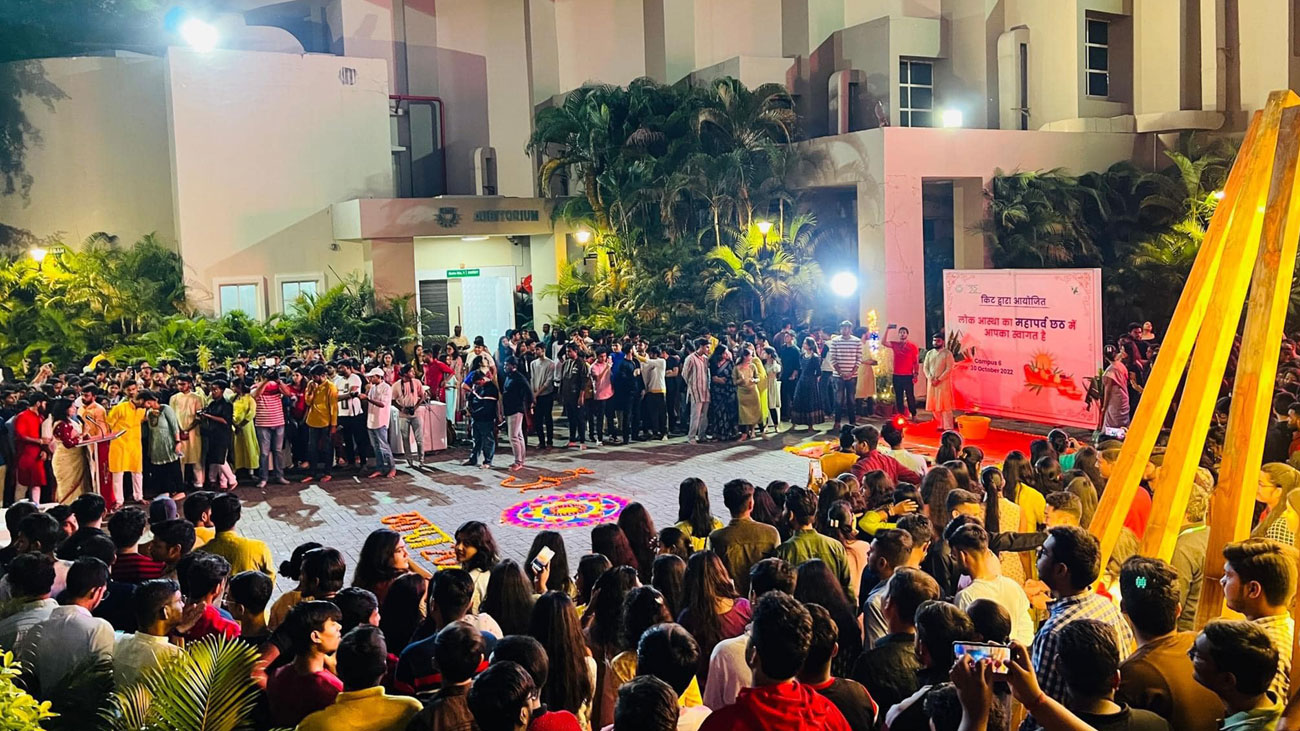
Celebrating its diversity of cultures, KIIT Student Activity Centre organized a 3-day long ceremony on the occasion of Chhath Puja from 29th Oct, 2022 to 31st Oct, 2022. Chhath Puja is a very significant festival of Bihar. People worship the Sun God and fast for a course of 3 days. This 3-day course comprises of Kharna, Sandhya Argh and Pratah Argh poojas done each day respectively.
Ketan Chauhan, a student of KIIT organised the event on a grand level and did the ritual proceedings as well. On the first day, Kharna puja was done at the KSAC premises. It was a small ceremony after which puri, sabzi and kheer prasad was distributed. Kharna marked the beginning of the 3-day fast along with surrendering footwear during this course.
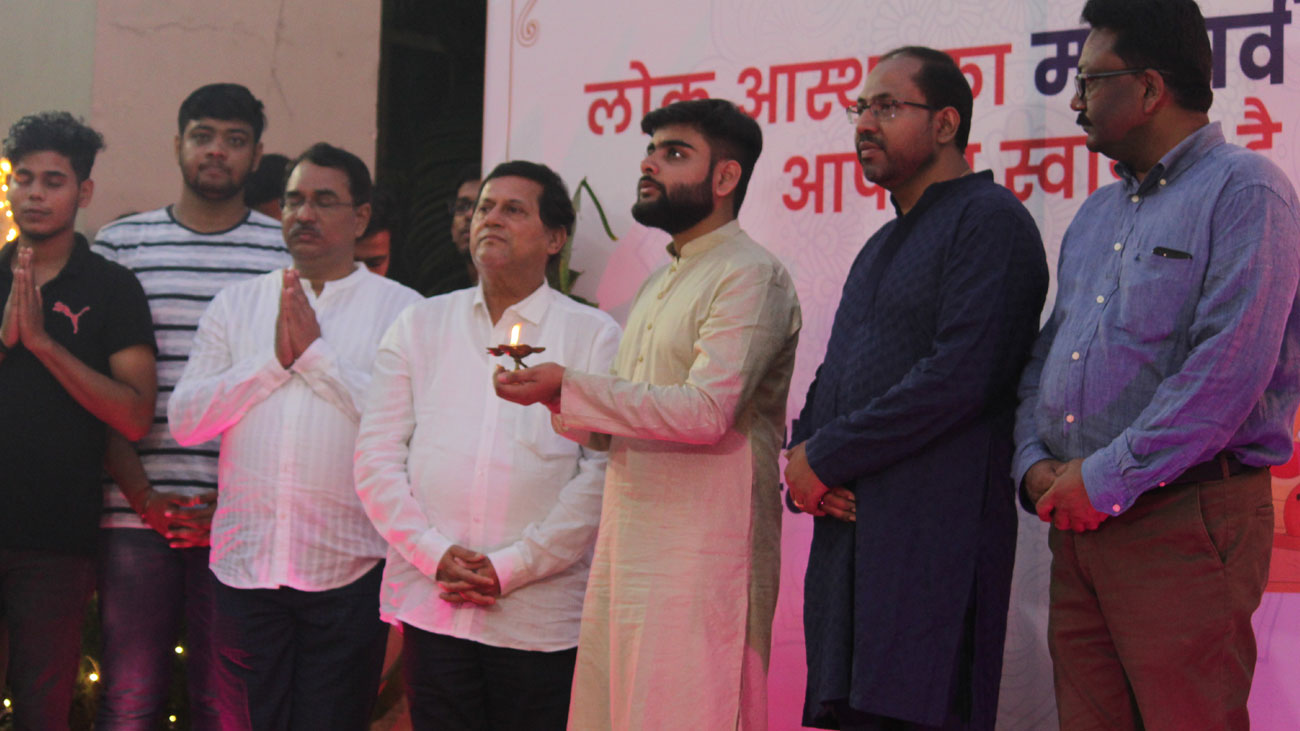
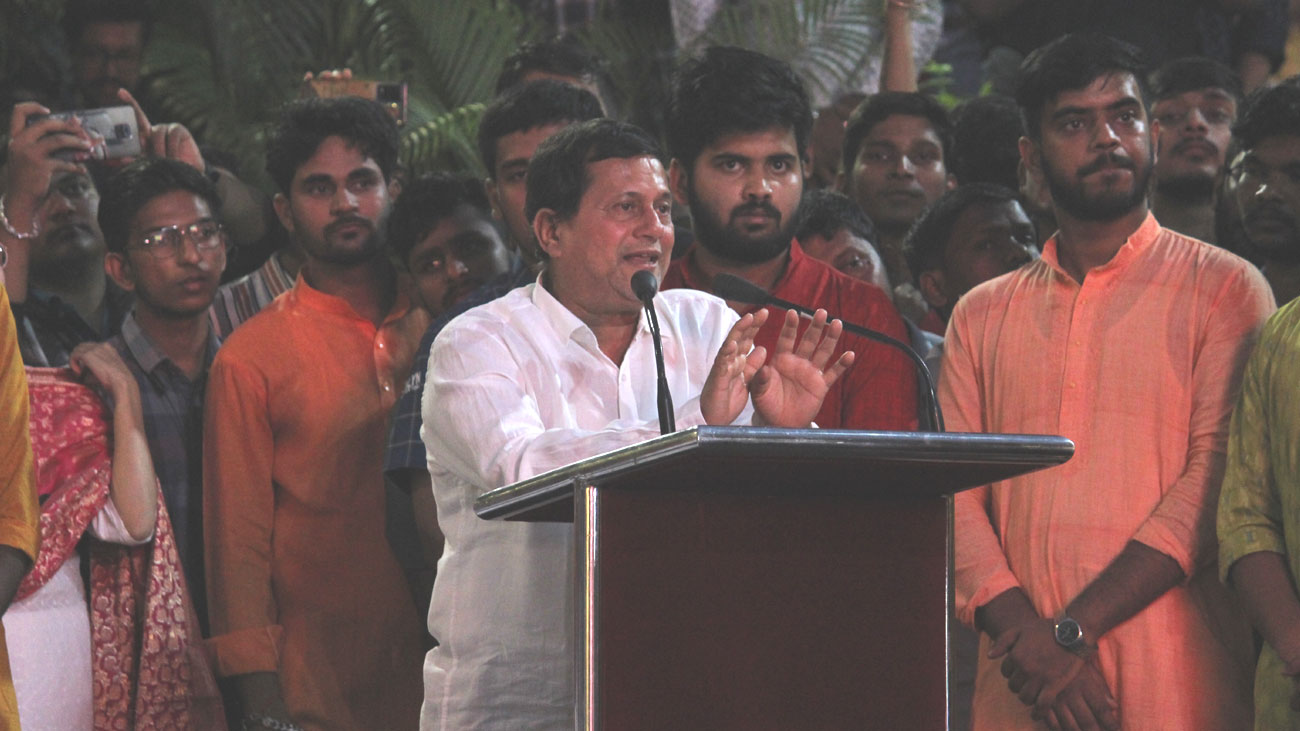
On a beautiful windy yet sunny day, the pooja of Sandhya Argh was organized on a grand level at campus 6. It was a beautiful set up, the flower and colour rangolis adding to the brightness and merriment of the event, with musicians singing the songs dedicated to the pooja. The Founder of KIIT and KISS, Dr. Achyuta Samanta; Vice-Chancellor Prof. Sasmita Samanta; Registrar Dr. Jnyana Ranjan Mohanty; and Dy. Director Student Services Prof. Dr. Shyam Sundar Behura embellished the auspicious ceremony by their presence. The venue was filled by students and in a fraction of minutes, and in no time the place was sparkling with devotees. The evening’s wind rustling, with the ceremony at the sunset and melodies in the air was a perfect frame, the setting sun was given argh.
For the last day, commencement of Pratah Argh pooja started at 4 A.M., way before dawn. The rising sun slowly filled up brightness in the morning sky. The ceremony followed the same course as the day before, and the rising sun was given argh. With this the fasting along with the festival of Chhath came to an end.
The entire aura during the 3-days was mesmerizing. KIIT was able to capture the essence of the festival and create a home-like, once in a lifetime experience for everyone. It was a commendable representation of people’s faith, how they celebrate and worship the God of Sun for their families’ well-being and prosperity with immense dedication every year during this beautiful festival.
https://news.kiit.ac.in/ksac/chhath-puja-celebrated-at-kiit/
 |  |  |
2. Seminar on ‘Issues on Tribal Displacement in India’
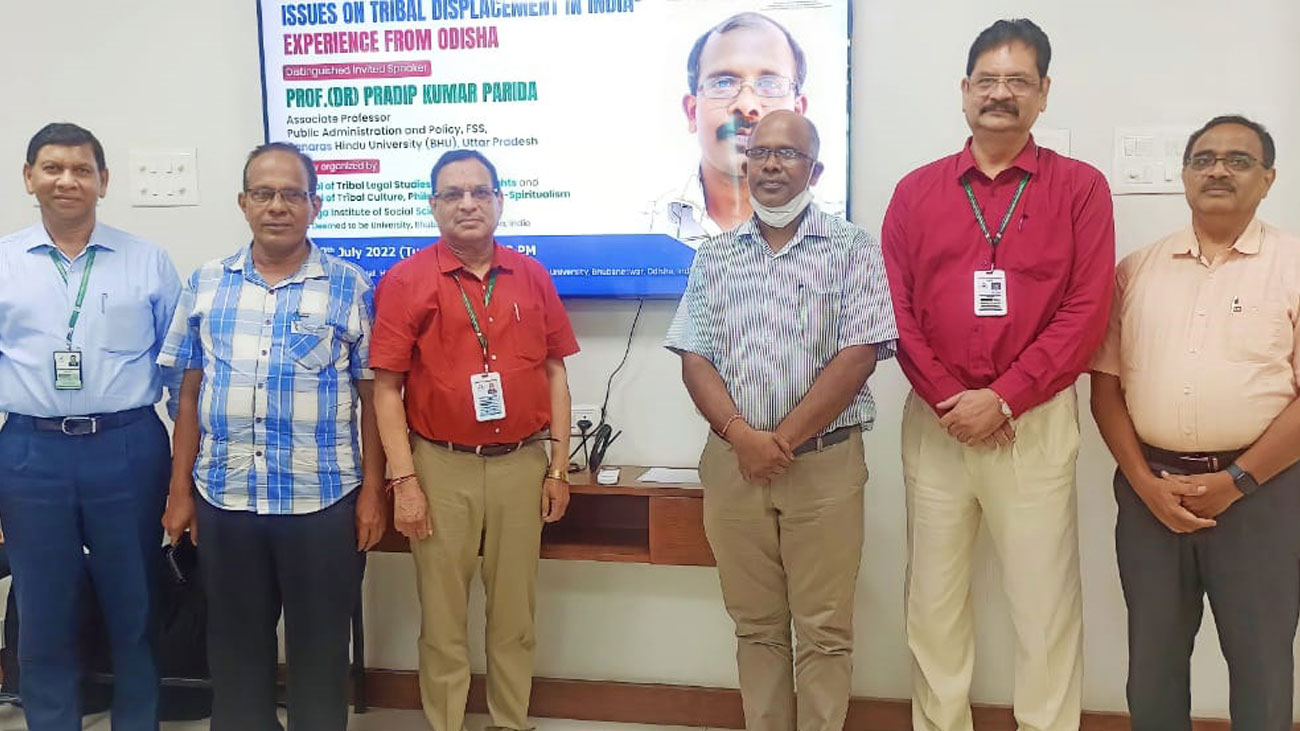
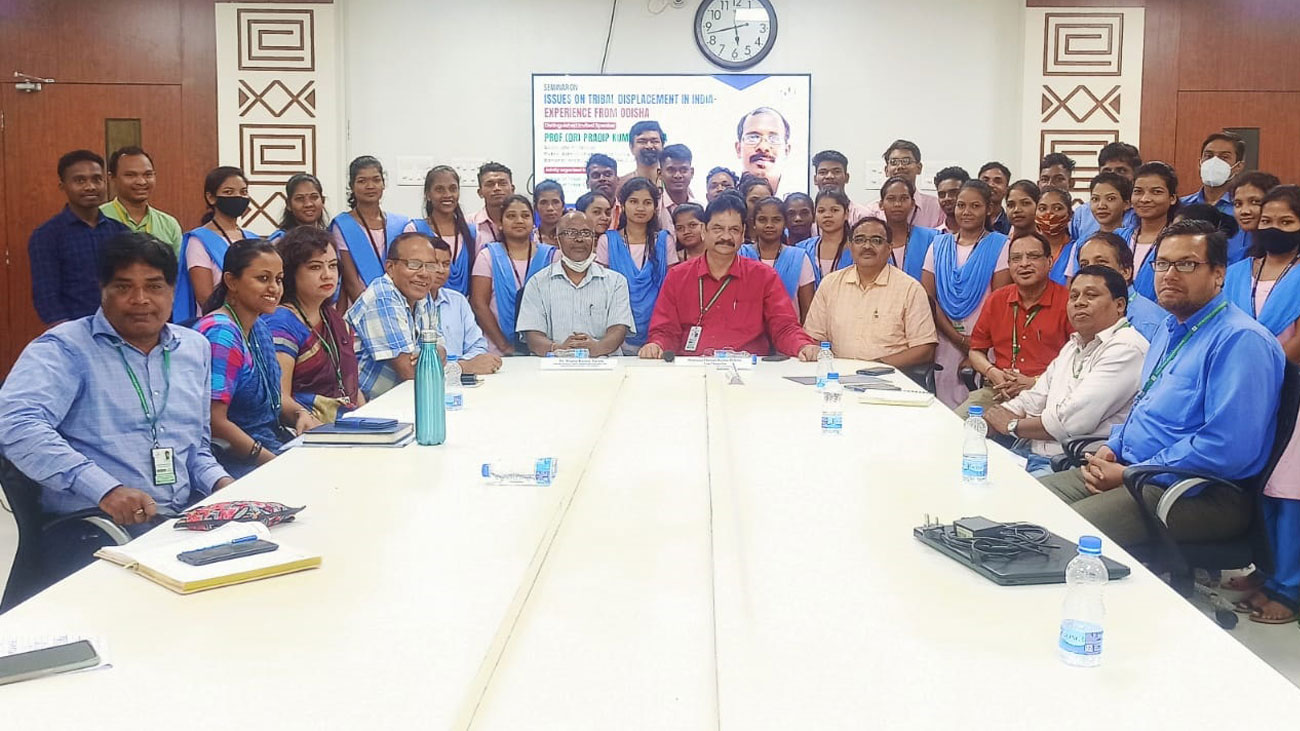
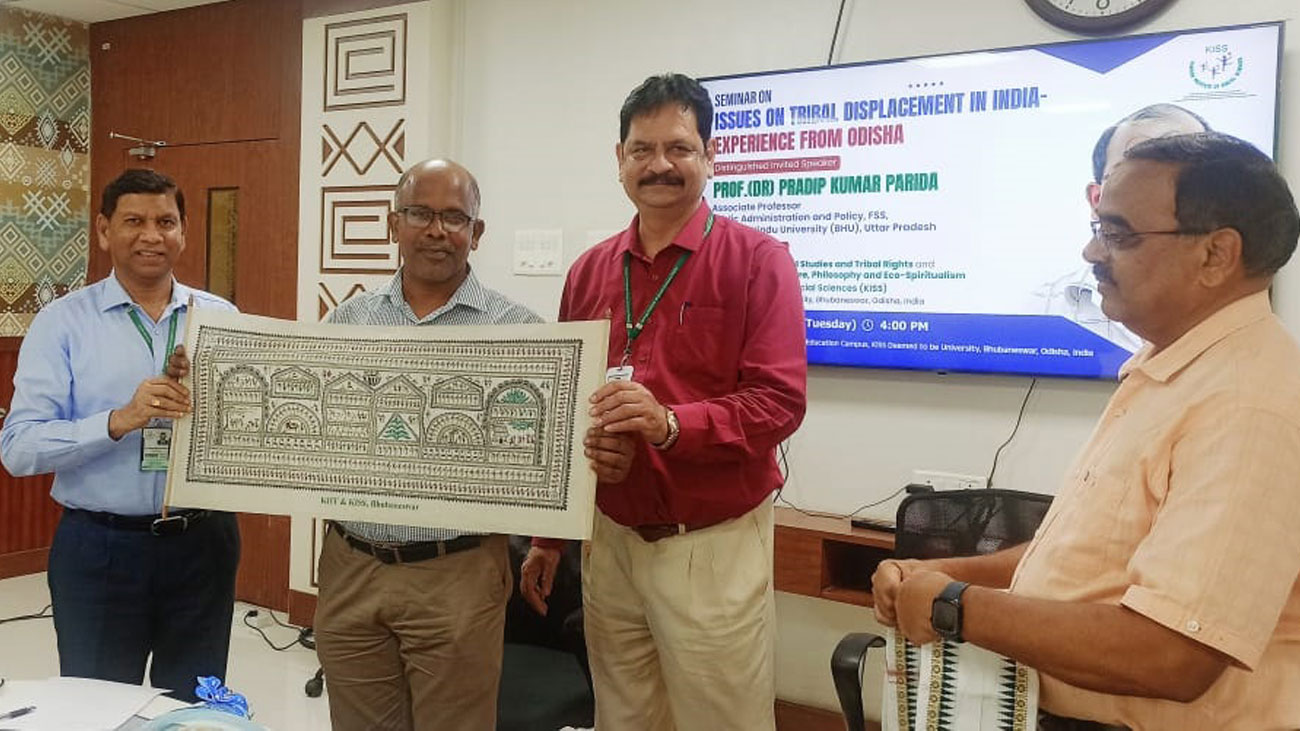
The School of Tribal Legal Studies and Tribal Rights and the School of Tribal Culture, Philosophy and Eco-Spiritualism, KISS jointly organized a seminar on ‘Issues on Tribal Displacement in India – Experience from Odisha’ on 12th July 2022. Professor Pradip Kumar Parida, Associate Professor, Public Administration and Policy, FSS, Banaras Hindu University was invited as the distinguished invited speaker. The seminar was attended by senior functionaries, faculty members, research scholars and students.
Addressing the gathering, Professor Deepak Kumar Behera, Vice-Chancellor, KISS said, development and underdevelopment are often two sides of the same coin, since the development of a section of the people often comes at the expense of the displacement of others. He regretted the ways in which the process of development always appears to call for sacrifices from some sections of the population, as though their marginalization is the price of development.
Professor Pradip Kumar Parida, who has written two books, over twenty papers and numerous articles in popular media, explored the dynamics, institutions, processes, politics involved in the conception and execution of development, arguing that the poorest affected by the development are usually also often those institutionally denied a voice. Development most often displaces the tribal population, alienating them from their motherland, and the landscape of which they form an integral part, as though they must pay the price for the development of the rest of the country, he stated.
The development model of the Nehruvian state had failed the tribals, turning them into aliens in their own land, Professor Parida opined, while lauding the efforts of exceptional bureaucrats who had called for more and better delivered compensation for the tribal population. Stressing on the pain and suffering of those who have lost their lands, home and other cultural institutions such as shrines, at the altar of development projects, such as Hirakud and other dams, he invoked the concept of development induced refugees. The benefit of development as a process has not trickled down to the grassroots, said Professor Parida. The students and scholars must develop empathy towards the pain and suffering of the tribal communities in order to acquire the requisite sensitivity for policy studies or public discourses involving tribals, he concluded.
Speaking at the seminar, Dr. Prashanta Kumar Routray, Registrar, KISS-DU recalled his experience of working in the Development Sector and with various NGOs on the issues of displacement and its impact on tribal population. While speaking in the context of KIIT and KISS, he reiterated the contributions of Dr. Achyuta Samanta, Founder, KISS & KIIT, especially the various educational and vocational initiatives undertaken by him, calling upon the students of KISS to take charge of their lives and their communities.
Dr. Krupasindhu Nayak also spoke on the occasion. Dr. Ratnakar Mahapatra, Dean, The School of Tribal Culture, Philosophy and Eco-spiritualism, delivered a formal vote of thanks.
 |  |  |
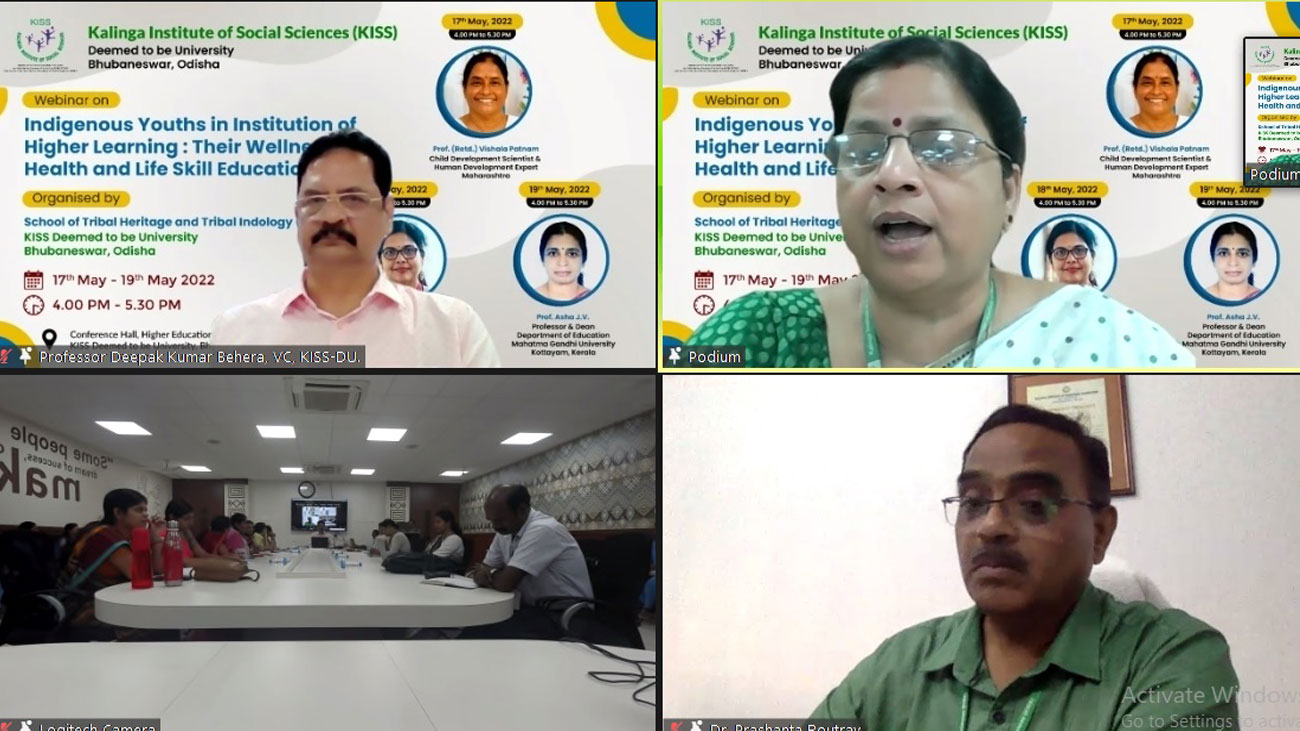
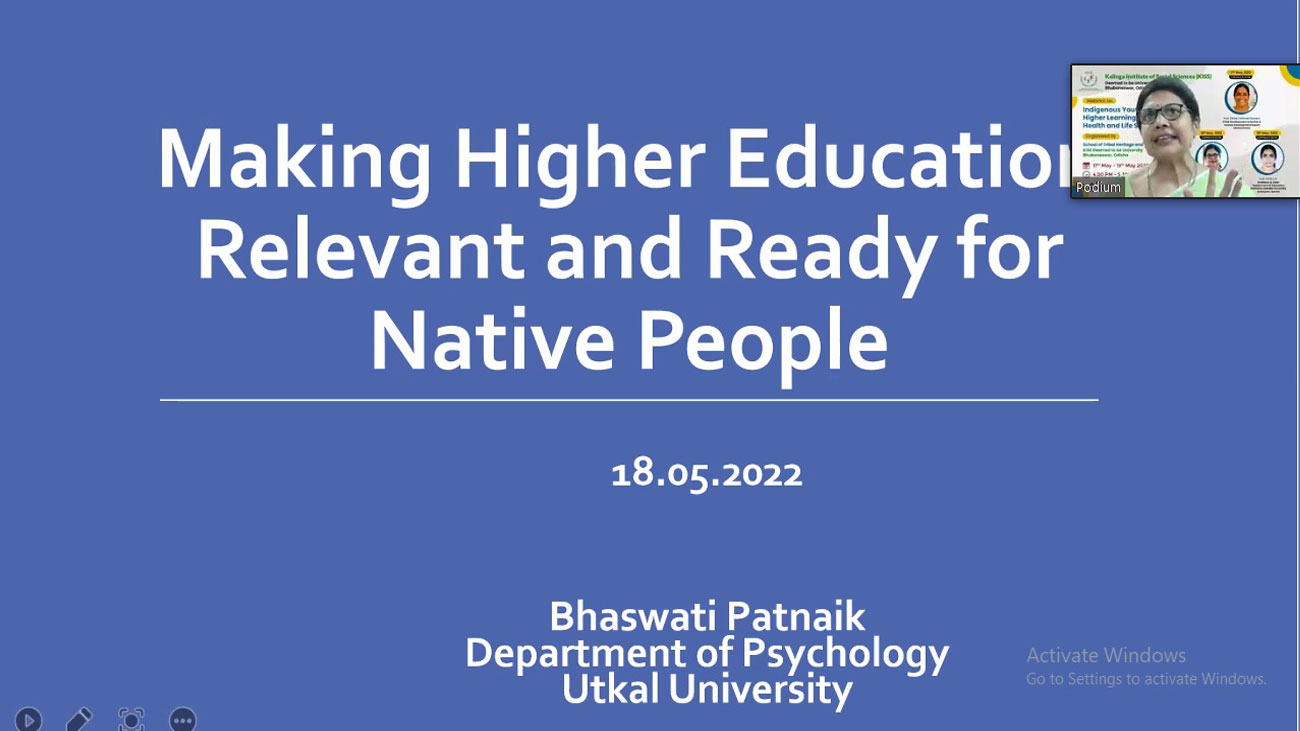
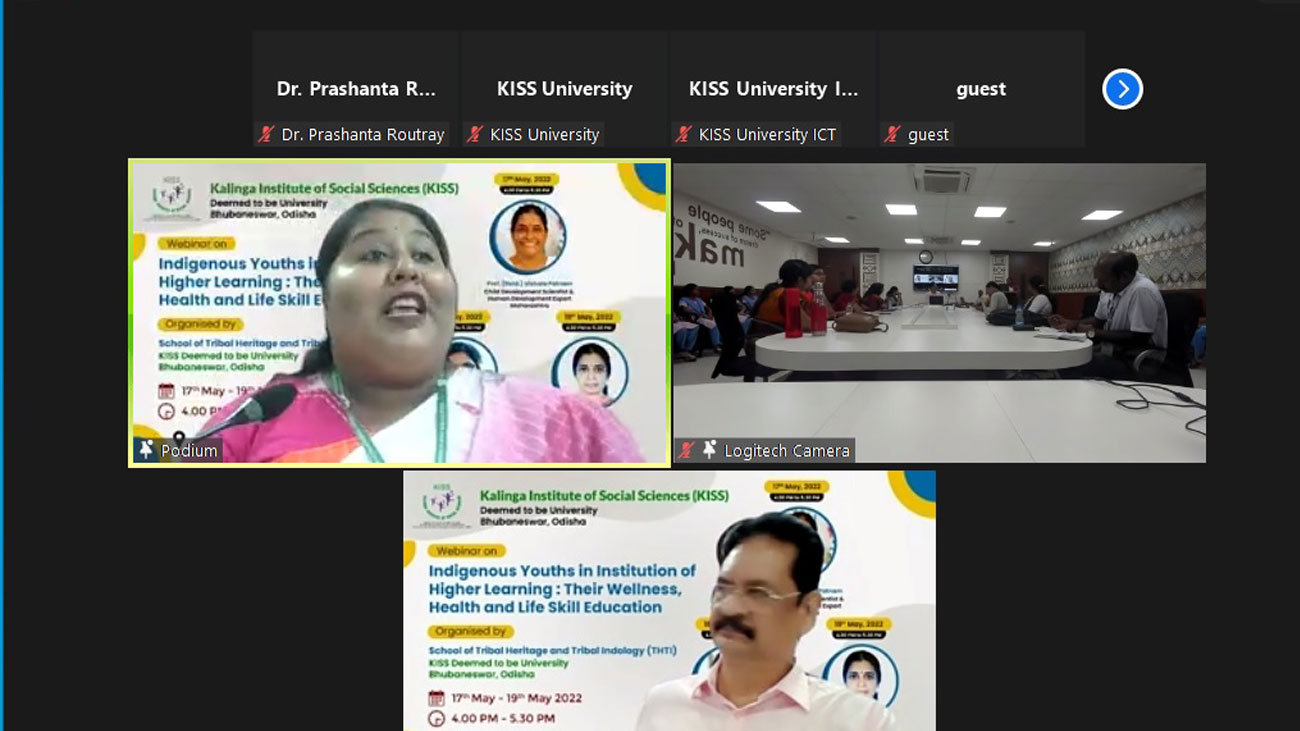
The School of Tribal Heritage and Tribal Indology (Home Science, Psychology and Education Programmes), KISS-DU organized a three-day webinar on “Indigenous Youths in Institutions of Higher Learning: Their Wellness, Health and Life Skill Education” from 17th May to 19th May 2022 through hybrid mode. Home Science Programme organized day 1 on 17th May 2022 and day 2 on 18th May 2022 was organized by Psychology Programme. Professor Bhaswati Patnaik, Head, Department of Psychology, Utkal University, Bhubaneswar who was invited as the distinguished speaker.
Professor Bhaswati Patnaik highlighted Kalinga Institute of Social Sciences (KISS) Deemed to be University as a model university across the globe for its uniqueness in preserving, protecting and promoting indigenous knowledge and culture to mainstream the indigenous youths in higher education. She focused on the present scenario in the institutions of higher learning and stressed upon the fact that indigenous students should not leave their self-identity and be with the native people after being educated. For this, the curriculum must be relevant and include topics on indigenous practices which will shape their identity and belief system. She expressed her happiness as KISS has been practicing the same as recently appointed the Professors of Practice to make the students aware in promoting their culture while learning when they are away from their native places and residing in the residential campus of KISS. She focussed on the idea of a reorientation in perspective of Higher education through the ‘four R’s i.e., Respect, Relevance, Reciprocity, Responsibility to address the three components of mind Cognition, Affect and Conation. She emphasized on involving the students in assigning responsibilities in student activities, participation in curriculum framing, participation in multicultural education of teachers, empowering them to choose the skills and knowledge.
Supplementing the lecture of the distinguished speaker, Professor Deepak Kumar Behera, Vice-Chancellor, KISS-DU expressed his concern on the fact that we have to educate ourselves to address the various needs of the tribal students while teaching to them. He stressed upon the innovative practices implemented in KISS such as appointing the Professors of Practice as the traditional intellectuals and the Professor Emeriti as the modern intellectuals to make the indigenous learning process more vibrant through both curricular and co-curricular activities to make them skilled. He also highlighted the various unique practices such as entrepreneurship training of students, vocational activities, sports, dance, music and many more.
While introducing the distinguished speaker, Dr. Sujata Acharya, Principal, KISS and Director KISS Wellness Centre, KISS-DU threw light on the academic achievements and remarkable work in the field of education. Professor Namita Mohanty, Professor Emerita KISS-DU gave introductory remarks at the beginning of the session. Mrs. Shradha Smaraki Das was instrumental at moderating the whole session and Mr. Nilamani Moharana facilitated the question-answer session.
Mrs. Ananya Das, Head, Psychology Programme, KISS-DU summed up the session and proposed the Vote of Thanks.
 |  |  |
4. Knowledge Dialogue Series: Webinar on ‘Cross–Cultural Agility’ at KSOM
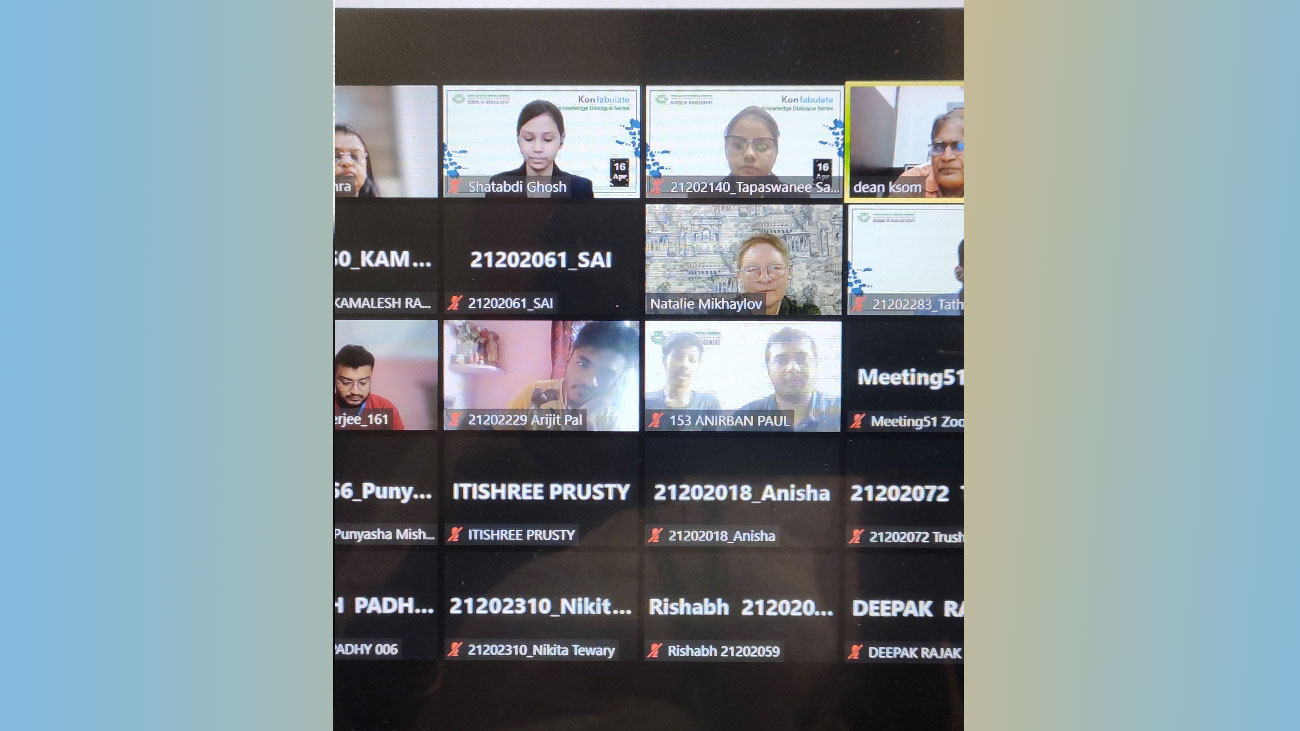
KIIT School of Management (KSOM) organized a Knowledge Dialogue Series webinar on “Cross–Cultural Agility”. Delivering the webinar talk, Ms. Natalie Solveig Mikhaylov, Associate Professor, Westminster International University, Tashkent and Head, Management & Marketing Department came up with her own concept of cultural agility, which states that in a group, each individual has his or her own cultural norms and values and that one must learn to tolerate and respect these norms and values in order to prevent conflict and maintain organizational unity. She went on to say how one may acquire cultural competency through connecting with people from other cultures, communicating effectively, building trust, and working well in cross-cultural occupations, tasks, and positions. She asked the participants to share examples of organizations that exercise cultural adaptability at the end of the session.The session was interactive and included an assessment activity to determine the levels of cultural competency. MBA – 1 students, Ms. Shatabdi Ghosh and Ms. Annada Kumari Mishra anchored the session. The host for the event was Ms. Tapaswanee Sahoo from MBA -1. Members of Synergy, the HR Club of KSOM, put in great efforts for the event.
 |  |  |
5. KSAC Celebrates “Matribhasha Diwas”
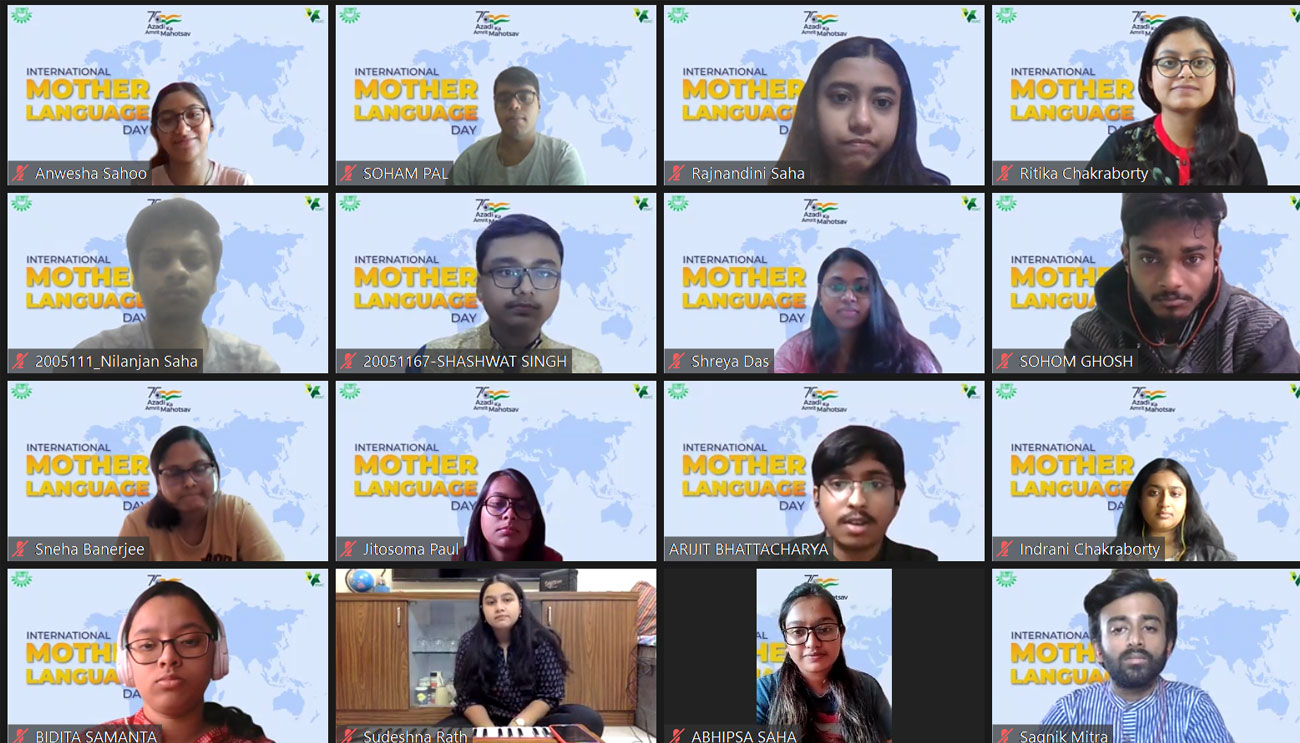
The student members of KIIT Student Activity Centre (KSAC) celebrated “Matribhasha Diwas” on 21st February 2022 on virtual mode to promote and preserve mother languages. The cultural meet started with a melodic Sanskrit song sung beautifully by Shaswat Singh. Sudeshna Rath, with her soulful voice, sang a sweet-sounding Marathi and Odia song. The meet was beautifully ended with Indrani Chakraborty’s lovely Bengali song highlighting the linguistic diversity of our country. Dr. Shyam Sundar Behura Dy. Director SS spoke about the relevance of different languages and thanked the organizers of the event.
 |  |  |